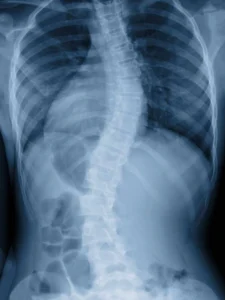

Most spinal problems don’t come from a single dramatic injury. They build up quietly over months and years from small, everyday habits that seem harmless in the moment. The good news is that because these habits are within your control, fixing them is one of the most powerful things you can do for your long-term spinal health. Here are five of the most common culprits I see in my Cedar Park practice, and how to address each one.
1. Looking Down at Your Phone
The average person spends hours each day looking down at a phone, and the toll on the cervical spine is significant. When your head tilts forward to look at a screen, the effective weight it places on your neck increases dramatically. A head held in neutral weighs about 10 to 12 pounds. Tilt it forward 60 degrees to look at your phone, and the strain on your neck approaches 60 pounds.
Multiply that load by the hours you spend on your phone each day, and you have a recipe for the flattened cervical curve, forward head posture, and chronic neck tension that’s become epidemic. This is the single most common postural problem I see across every age group now.
The fix: Bring your phone up to eye level instead of dropping your head down to it. Hold it higher. Prop it up when typing. And take regular breaks to look up, roll your shoulders back, and reset your posture. The goal is keeping your head stacked over your shoulders rather than hanging out in front of your body.
2. Sleeping on Your Stomach
Stomach sleeping is the worst position for your spine, and a lot of people do it without realizing the cost. When you sleep on your stomach, you have to turn your head to one side to breathe, which keeps your cervical spine rotated for hours every night. At the same time, the position flattens the natural curve of your lower back and lets your midsection sink, stressing the lumbar spine.
Spending a third of your life in this position works directly against your spine’s natural alignment, and it’s a common reason people wake up with neck and back stiffness that takes hours to ease.
The fix: Transition to side or back sleeping. Side sleeping with a pillow between your knees keeps the spine and pelvis aligned. Back sleeping with a pillow under your knees supports the natural lumbar curve. If you’re a committed stomach sleeper, the transition takes a few weeks of conscious effort, but your spine will thank you. Placing a pillow under your pelvis can reduce the lumbar strain during the transition.
3. Sitting for Hours Without Moving
Prolonged sitting is one of the most damaging things we do to our spines, and modern life is built around it. Sitting increases the pressure on your lumbar discs significantly compared to standing, and holding that increased load for hours at a time, day after day, accelerates disc wear and creates the muscle imbalances that lead to chronic back and hip problems.
The discs depend on movement to stay nourished — they have no direct blood supply and rely on changes in pressure from movement to exchange nutrients and waste. Sitting still for hours starves them of that exchange.
The fix: Movement is the antidote, and it doesn’t take much. Stand and move for two to three minutes every 45 to 60 minutes. Set a timer if you need to. Even brief, frequent movement breaks dramatically reduce the spinal cost of a desk-bound day. The specific position matters less than simply not staying in any one position for too long.
4. Carrying a Bag on the Same Shoulder Every Day
This one flies completely under the radar. Carrying a heavy bag, purse, or laptop bag on the same shoulder day after day creates a consistent asymmetric load on your spine. To compensate for the weight on one side, you unconsciously hike that shoulder and lean your spine the other way. Over time, this trains a lateral imbalance into your posture and your muscles.
The result is one-sided muscle tension, uneven shoulder height, and the kind of asymmetric spinal loading that contributes to one-sided back and neck pain.
The fix: Switch sides regularly if you carry a shoulder bag. Better yet, use a backpack with both straps, which distributes weight evenly across your spine. And lighten the load — most people carry far more in their daily bag than they actually need. Your spine handles a balanced, lighter load far better than a heavy, one-sided one.
5. Crossing Your Legs When You Sit
Habitually crossing your legs the same way every time you sit creates pelvic asymmetry. When you cross one leg over the other, you tilt and rotate your pelvis, which the lumbar spine above it has to accommodate. Do it for a few minutes and it’s harmless. Do it for hours every day, always with the same leg on top, and you train an asymmetry into your pelvis and lower back.
This is a frequent and overlooked contributor to the one-sided lower back pain and SI joint dysfunction I see in patients who can’t trace their pain to any obvious cause.
The fix: Aim to keep both feet flat on the floor when seated. If you do cross your legs, alternate which leg is on top so you’re not constantly reinforcing the same asymmetry. Being mindful of this small habit pays off over time.
Small Changes, Big Difference
What makes these habits so impactful is their repetition. None of them hurt you in a single instance — the damage comes from doing them thousands of times over months and years. The flip side is that correcting them works the same way: small, consistent improvements compound into meaningfully better spinal health over time.
That said, if you’ve been living with these habits for years, there may already be accumulated dysfunction that fixing the habits alone won’t fully resolve. The joint restrictions, muscle imbalances, and alignment changes that have built up often need to be addressed directly before the corrected habits can do their preventive work.
At Gateway to Wellness, our chiropractic care addresses the accumulated damage from these everyday patterns and helps reset your spine to a healthier baseline. Combined with better daily habits, it’s the most effective approach to long-term spinal health.
If years of everyday habits have caught up with your spine in Cedar Park, Leander, or North Austin, we can help you turn it around. Contact Gateway to Wellness or call (512) 250-2224 to schedule your evaluation.