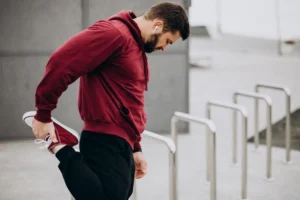

A good pickleball warm up should take about 8 to 10 minutes and focus on getting your hips, ankles, shoulders, and core ready for quick, explosive movement. Most players either skip warming up entirely or just hit a few practice shots, which isn’t enough to prepare your joints for the sudden stops and pivots the game demands. A few minutes of the right movements before you step on the court can make a real difference in how your body holds up.
Why Most Pickleball Players Skip This Step
Pickleball has a social, low-pressure reputation, and that’s part of its appeal. Nobody wants to look overly serious doing lunges next to the court while everyone else is chatting and laughing before the game starts.
But that casual attitude is exactly why we see so many sports injuries in players who consider themselves recreational rather than competitive. Your joints don’t know the difference between a casual match and a tournament. They just know whether or not they’re ready for sudden, forceful movement.
The Warm Up Routine We Recommend
Here’s a simple sequence that targets the areas pickleball stresses most. You don’t need equipment, and it only takes a few minutes.
1. Ankle Circles and Rolls (1 minute)
Stand on one leg and slowly roll your ankle in both directions, then switch sides. This wakes up the small stabilizing muscles that keep you steady during quick direction changes.
2. Hip Circles (1 minute)
Standing with your hands on your hips, make slow, controlled circles with your hips in both directions. Pickleball asks your hips to rotate constantly, so this helps loosen them before you’re asking for that motion at full speed.
3. Walking Lunges with a Twist (2 minutes)
Take a controlled lunge forward, then rotate your torso toward your front leg. This mimics the lunge-and-reach motion you’ll use chasing down shots, while also warming up your core.
4. Lateral Shuffles (2 minutes)
Side shuffle for about 10 feet in each direction, staying low with bent knees. This is one of the closest warm up movements to actual gameplay, since so much of pickleball involves moving side to side.
5. Arm Circles and Shoulder Rolls (1 minute)
Loosen your shoulders with big arm circles in both directions, followed by shoulder rolls. This helps prepare your shoulder and elbow for the repetitive swinging motion ahead.
6. A Few Practice Swings (2 minutes)
Finish with some easy, controlled practice swings, gradually increasing your effort until you’re moving at close to game speed.
What This Actually Does for Your Body
Warming up isn’t about looking impressive before a casual game in Cedar Park. It’s about increasing blood flow to your muscles, improving joint mobility, and giving your nervous system a chance to prepare for the demands you’re about to place on it.
Cold, stiff tissue is far more likely to strain or tear than tissue that’s already been through a light range of motion warm up. This is especially true for your knees, which take on a lot of rotational stress during pivots and lateral movement.
Warming Up Won’t Fix Everything
I want to be honest here. A good warm up reduces your risk of injury, but it doesn’t correct underlying issues like a stiff hip, an old ankle sprain that never fully healed, or muscle imbalances built up from years of sitting at a desk. Those things need to be addressed directly.
If you’re warming up properly and still dealing with recurring pain, that’s usually a sign there’s something deeper going on that a few minutes of stretching won’t solve on its own.
Building a Body That Can Handle the Game
Through our sports performance and rehabilitation care, we help players address those underlying limitations so their bodies are genuinely ready for the demands of pickleball, not just temporarily loosened up before a game. It’s the difference between managing symptoms and actually fixing the problem.
If pain keeps showing up no matter how well you warm up, let’s figure out why. Call Gateway to Wellness at (512) 250-2224 or schedule your visit today.