
Spinal arthritis is one of the most common reasons people develop back stiffness and aching as they get older, especially the kind that’s worst in the morning and eases a bit once you start moving. It’s the gradual wear of the small joints in your spine, and while it’s a normal part of aging for many people, that doesn’t mean you have to just live with the discomfort.
Let me explain what spinal arthritis actually is, why it causes the symptoms it does, and what you can do to stay comfortable and mobile.
What Spinal Arthritis Is
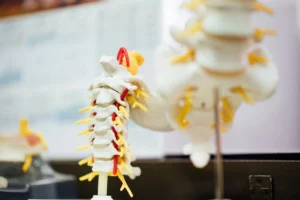
Your spine isn’t just a stack of bones. Between and behind each pair of vertebrae are small joints called facet joints that guide your spine’s movement and allow it to bend and twist smoothly. Like every other joint in your body, these facet joints are lined with cartilage.
Spinal arthritis, most often the osteoarthritis type, is the gradual breakdown of that cartilage over time. As the cartilage wears down, the joint surfaces no longer glide smoothly against each other. The result is friction, inflammation, stiffness, and the aching discomfort that so many people associate with an aging back.
Because it centers on these facet joints, spinal arthritis is sometimes called facet joint arthritis or facet joint syndrome. It most commonly affects the lower back and the neck, the two most mobile regions of the spine, which makes sense given that more movement over the years means more wear.
Why It Makes Your Back Stiff and Achy
The symptom pattern of spinal arthritis is pretty distinctive, and understanding why it happens helps make sense of what you’re feeling.
The hallmark is stiffness that’s worst after periods of rest. Morning stiffness is the classic example. Overnight, with no movement, the arthritic joints stiffen up and inflammatory fluid settles in. When you wake up, your back feels stiff and achy, and it takes a while to loosen up as you start moving.
Then there’s the opposite pattern too. After being active for a long time, the worn joints can become irritated and sore from the accumulated use. So many people with spinal arthritis feel best in that middle zone, stiff when they’ve been still too long, sore when they’ve overdone it, and most comfortable with moderate, regular movement.
You might also notice reduced flexibility, a feeling that your back doesn’t move as freely as it used to, and sometimes a grinding or catching sensation as the roughened joint surfaces move against each other. This stiffness is one of the most common things I hear about from my older patients in Cedar Park.
Why It Happens
Spinal arthritis is primarily driven by time and use. It’s part of the natural aging process, the cumulative result of decades of movement, load, and the gradual decline in the body’s ability to maintain and repair cartilage.
But age isn’t the only factor. Previous injuries to the spine can accelerate arthritis in the affected joints. Poor posture and spinal misalignment cause uneven loading, which wears certain joints faster than others. Excess body weight adds to the load the spine carries. And genetics play a role in how quickly cartilage breaks down.
Here’s an important point I always share with patients: the rate at which spinal arthritis progresses isn’t entirely fixed. Joints that are aligned well and moving properly wear more evenly and slowly than joints that are misaligned and restricted. That’s a meaningful piece of the picture, because it’s something you can influence.
The Good News About Managing It
Spinal arthritis can’t be reversed, the worn cartilage doesn’t grow back. But here’s what I want you to understand: how much it affects your life is far more variable than most people assume, and much of it is manageable.
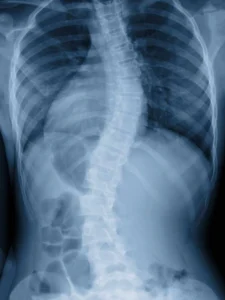
I’ve treated patients with significant arthritis on their X-rays who move well and have minimal pain, and others with milder arthritis who are quite limited. The difference usually comes down to how well the surrounding structures are functioning, how mobile the spine is kept, and how the arthritic joints are being loaded.
This is why the goal with spinal arthritis isn’t to cure it. It’s to keep you moving well, minimize the pain and stiffness, and slow the progression where possible. Those are very achievable goals for most people.
Why Movement Is Your Friend
One of the most important things to understand about spinal arthritis is that movement generally helps. It might seem like resting a sore, stiff back would be the answer, but the opposite is usually true.
Cartilage and joints depend on movement to stay healthy. Motion circulates the fluid that nourishes and lubricates the joints. When you keep an arthritic joint moving within a comfortable range, you reduce stiffness, maintain mobility, and support the joint’s health. When you let it go still, it stiffens further and the surrounding muscles weaken, which makes everything worse.
This is exactly why that morning stiffness eases once you get going, and it’s a clue to the broader principle: keep moving.
How Chiropractic Care Helps
Chiropractic care is well suited to managing spinal arthritis, because it directly addresses the two things that most affect how arthritis feels: joint mobility and spinal alignment.
When you have spinal arthritis, the affected joints tend to become restricted, and the muscles around them tighten protectively. This restriction and tension add a significant layer of stiffness and discomfort on top of the arthritis itself. Our chiropractic care works to restore movement to those restricted joints and ease the surrounding muscle tension, which often produces meaningful relief.
For arthritic spines, I use gentle, carefully chosen techniques, frequently instrument-based adjustments that restore mobility without stressing the worn joints. Keeping the arthritic joints moving freely is one of the best things we can do to reduce stiffness and slow the progression of the wear.
Many of my Cedar Park patients with spinal arthritis find that regular care keeps them noticeably more comfortable and mobile than they’d be otherwise. It doesn’t change the arthritis on the X-ray, but it changes how they feel and function day to day, which is what actually matters to them.
When to Get Assessed
If you’re dealing with back stiffness and aching that’s become a regular part of your life, especially the morning-stiffness pattern, it’s worth getting properly evaluated. Understanding whether spinal arthritis is behind it, and how significant it is, lets us put a management plan in place that keeps you moving well for the long haul.
If spinal arthritis is stiffening up your days in Cedar Park, Leander, or North Austin, we can help you stay comfortable and mobile. Contact Gateway to Wellness or call (512) 250-2224 to schedule your evaluation.