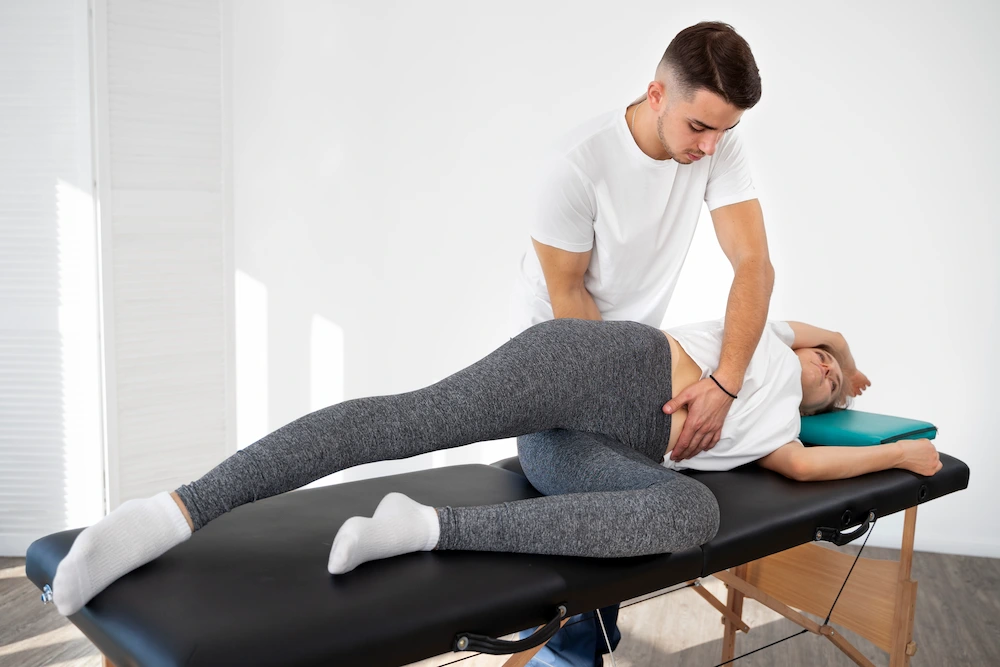
Chiropractic care is safe and appropriate for children and teenagers when performed by a trained provider using age-appropriate techniques. Kids aren’t immune to spinal stress — between sports injuries, heavy backpacks, and hours of screen time, their spines face real demands. Getting those issues addressed early can prevent them from becoming chronic problems in adulthood.
Why Parents Bring Their Kids to a Chiropractor
Most parents who bring their kids into our Cedar Park office fall into one of a few categories. Some have a child dealing with a sports injury — a teenager who rolled an ankle playing soccer and now has hip and back pain that won’t resolve, or a young athlete with recurring shoulder problems from overhead throwing. Others have noticed their child’s posture deteriorating and want to get ahead of it before it becomes a bigger issue. And some come in after their child has been complaining about headaches, back pain, or neck soreness that keeps getting dismissed as “growing pains.”
That last scenario is more common than it should be. Kids do experience real musculoskeletal pain, and they’re not always great at describing it or advocating for themselves. A thorough chiropractic evaluation can identify things that get missed elsewhere.
Is Chiropractic Safe for Children?
This is the question I hear from parents most often, and it’s a fair one. The answer is yes — with an important qualifier. Chiropractic care for children uses significantly gentler techniques than adult care. The force used for an infant is no more than you’d use to test the ripeness of a tomato. For a child or teenager, adjustments are lighter and more targeted than what an adult would receive.
The pediatric spine is more flexible and responsive than an adult’s, which actually means it responds well to gentle correction. The goal with young patients isn’t the same as with a 45-year-old who has years of accumulated misalignment — we’re often working with a spine that can correct relatively quickly when given the right input.
As with any healthcare, the key is finding a provider who has experience working with pediatric patients and adjusts their approach accordingly. Not every chiropractor does, and it’s completely reasonable to ask about a provider’s experience before bringing your child in.
Sports Injuries in Young Athletes
Cedar Park and Leander have a strong youth sports culture. Soccer, baseball, football, swimming, gymnastics — these sports place real demands on developing bodies, and injuries are a part of that. What concerns me is when a sports injury doesn’t fully heal, and the young athlete compensates around it and keeps playing.
A teenager who sprains an ankle and keeps playing without proper rehab will shift weight to the opposite leg. That asymmetry loads the opposite hip and knee differently. Over months, it can create muscle imbalances throughout the pelvis and lower back that show up as chronic pain — not just in the original ankle, but in areas the athlete doesn’t connect to the original injury at all.
Our sports rehabilitation approach for young athletes involves treating the actual injury site, addressing the compensation patterns that have developed around it, and building a return-to-sport plan that reduces re-injury risk. We also work with athletes on injury prevention — identifying imbalances and movement patterns that are likely to lead to injury before they do.
Backpack Posture and Screen Time
Two things are putting enormous strain on kids’ spines right now: heavy backpacks and prolonged screen time. Neither is new, but the combination — and the sheer volume of both — has made posture-related problems in children significantly more common than they were a generation ago.
A backpack should weigh no more than 10 to 15 percent of a child’s body weight. Most students are carrying significantly more than that, often slung over one shoulder, which creates lateral spinal loading and asymmetric muscle tension. Over a school year, that adds up.
Screen time adds the forward-head problem. A child spending three to four hours a day on a phone or tablet with their head dropped forward is loading their cervical spine the same way an adult desk worker does — just for fewer hours. The postural consequences are the same: cervical curve flattening, upper back rounding, and tension headaches that parents often attribute to dehydration or eye strain.
Catching these patterns early — before they become structural — is one of the most valuable things a pediatric chiropractic evaluation can do.

Growing Pains: What’s Real and What Isn’t
Some degree of musculoskeletal discomfort during growth spurts is normal. Bones grow faster than muscles and tendons can comfortably keep up with, which creates tightness and mild aching — typically in the legs. That’s genuine growing pain.
What gets mislabeled as growing pains is often something different: recurring back pain, neck pain, or headaches that a child experiences regularly. These symptoms have real causes that deserve investigation — not reassurance that they’ll grow out of it.
I’ve seen young patients in Cedar Park who had been told for years that their back pain was just growing pains, only to find on exam that they had meaningful spinal misalignment or early scoliosis that had simply been missed. Early identification and treatment of these issues makes a significant difference in long-term outcomes.
What to Expect at a Pediatric Chiropractic Visit
A first visit for a child at Gateway to Wellness looks similar to an adult first visit in structure — thorough history, physical exam, and a clear report of findings — but the experience is calibrated for a younger patient.
I take extra time to explain everything I’m doing in age-appropriate terms so the child understands and isn’t anxious. Parents are always present and involved. The exam is gentle and interactive. And I don’t recommend X-rays for every young patient — I make that decision based on clinical findings and the specific situation.
For teenage athletes, the conversation about goals is just as important as it is with adult athletes. What sport are they in? What’s their season look like? What do they want to be able to do? Treatment is built around getting them back to full performance, not just making the pain manageable.
A Note on Scoliosis Screening
Many schools conduct basic scoliosis screening, but these screenings are limited and miss a meaningful percentage of cases. If your child has been checked at school and cleared, that’s reassuring — but it’s not the same as a full chiropractic assessment that evaluates spinal alignment, leg length discrepancy, and muscle asymmetry in detail.
If you’ve noticed uneven shoulders, one hip sitting higher than the other, or your child consistently leaning to one side, it’s worth having that looked at. Scoliosis that’s identified and monitored early is manageable. Scoliosis that progresses undetected through adolescence is a much harder problem to address.
If you have questions about whether chiropractic care is right for your child or teen, we’re happy to talk it through. Contact Gateway to Wellness in Cedar Park or call (512) 250-2224. We serve families throughout Cedar Park, Leander, and North Austin, and we take the same thorough, unhurried approach with your kids that we do with every patient in our practice.