
That old ankle sprain from 2015? The fender bender from three years ago? The shoulder injury you got playing softball in college? You probably think those are ancient history. But at Gateway to Wellness in Cedar Park, we see the same pattern constantly: pain showing up today that’s directly connected to injuries you thought healed years ago. Your body never forgot those injuries – it just found ways to work around them until it couldn’t anymore.
Why “Healed” Doesn’t Mean “Fixed”
When you sprain an ankle or injure your back, your body goes through a healing process. The inflammation subsides, the acute pain goes away, and eventually you feel better. Mission accomplished, right?
Not exactly. What actually happened is your body healed the damaged tissue as best it could, then adapted your movement patterns to protect that area. Those adaptations become your new normal. You don’t even notice them after a while.
But here’s the problem: every adaptation creates stress somewhere else. When you favor one leg after an ankle injury, your opposite hip takes extra load. Your lower back twists slightly to keep you balanced. Your shoulders adjust to maintain your center of gravity.
In my 15 years treating chronic pain patients, I’ve found that today’s pain is almost always connected to yesterday’s injuries through these compensation chains.
The Body’s Compensation Timeline

Understanding how old injuries create new pain requires understanding how compensation works over time.
Immediately after an injury, your body makes obvious changes. You limp to protect a hurt knee. You avoid turning your neck after whiplash. You don’t lift your arm above shoulder height after a rotator cuff strain. These are conscious adaptations.
But after the acute phase passes, unconscious adaptations continue. Your muscles maintain different tension patterns. Your joints move in slightly altered paths. Your spine compensates for imbalances elsewhere. You don’t feel these changes because they happen gradually.
Years later, those compensations have created their own problems. The muscles that took over for injured ones are now overworked and tight. Joints that moved abnormally have developed arthritis. Vertebrae that shifted to keep you balanced are now causing nerve compression.
This is why pain can appear “randomly” in a spot that was never injured. It’s not random – it’s the result of years of compensation finally breaking down.
The Whiplash That Shows Up Five Years Later
Let me share a pattern I see constantly with auto accident injuries. Someone gets rear-ended. They have some neck soreness for a few weeks, maybe see their doctor, get some muscle relaxers, and feel better within a month or two.
Five years later, they’re in my office with chronic shoulder pain, headaches, or upper back problems. When I ask about old injuries, they mention the car accident but insist it healed fine years ago.
What actually happened? The whiplash injury stretched ligaments and damaged soft tissues in ways that altered how their neck moves. Their body adapted by increasing muscle tension to stabilize the area. Their shoulders changed position to reduce neck movement. Their upper back took on extra work.
For years, these compensations worked well enough that they didn’t notice. But gradually, the overworked muscles developed trigger points. The altered shoulder position created impingement. The extra stress on the upper back led to disc degeneration.
The injury from 2015 is absolutely causing pain in 2026. It just took this long for the compensation pattern to fully break down.
Sports Injuries and the Ripple Effect
Athletes understand injuries. What they often don’t understand is how an old sports injury to one body part affects everything else years later.
I had a patient recently who injured his knee playing basketball in high school. He’s 45 now and came to me with chronic low back pain. He couldn’t understand the connection – his knee was fine, and he’d never injured his back.
But when we examined his movement patterns, everything became clear. His old knee injury had changed how he walked and ran. His hip on that side didn’t extend fully anymore. His pelvis was slightly rotated. His spine curved to compensate for the uneven hips.
For 25 years, his body had been working around that knee injury. His back finally gave out because it had been carrying extra stress for two and a half decades.
This is why chiropractic care looks at your complete injury history, not just your current complaint. We’re looking for the original problem that started the compensation chain.
When Multiple Injuries Stack Up
It gets more complicated when you’ve had multiple injuries over the years. Each one adds another layer of compensation.
Maybe you sprained your ankle at 20, had whiplash at 25, hurt your shoulder at 30, and developed back pain at 35. Most people see these as separate, unrelated events.
But your body sees them as a connected timeline. Each injury changed how you moved. Each compensation created new stress patterns. By age 35, your body was trying to balance all these accumulated adaptations at once.
That’s when patients tell me “I didn’t do anything specific – the pain just started one day.” They’re right that there wasn’t a new injury. But their body finally ran out of ways to compensate for all the old ones.
Why X-Rays Tell the Story
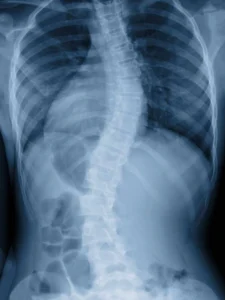
This is why we take X-rays at Gateway to Wellness even when patients insist nothing shows up on previous imaging. We’re not just looking for fractures or obvious damage. We’re looking at alignment, spacing, curves, and compensation patterns.
An X-ray might show that one hip sits higher than the other – a compensation from an old ankle injury. Or that your neck has lost its normal curve – often a result of old whiplash. Or that your spine rotates to one side – usually compensating for muscle imbalances elsewhere.
These structural changes are the visual record of your body’s compensation history. They show us exactly how old injuries are creating current pain, even when the connection isn’t obvious.
Breaking the Compensation Cycle
Here’s the good news: once we identify the compensation patterns, we can start breaking the cycle.
Treatment isn’t just about where it hurts now. It’s about restoring proper alignment and function to the areas that started compensating years ago. When we address the old ankle injury’s effect on your hip, your back pain often improves. When we fix the neck alignment issue from old whiplash, shoulder pain resolves.
This is why some patients are surprised when I spend significant time working on areas that don’t hurt. I’m not treating pain – I’m treating the dysfunction that’s causing pain elsewhere.
Most patients start seeing improvement within the first month as we begin unwinding these long-standing compensation patterns. Complex cases with multiple old injuries take longer because we’re essentially teaching your body new movement patterns after years of compensating.
The Role of Muscle Memory
Your muscles have memory. They remember how to move, and they resist change even when the old pattern is creating pain.
This is why treatment takes time. We’re not just adjusting your spine – we’re retraining your entire neuromuscular system. Your brain has to learn that it’s safe to move differently. Your muscles have to adapt to new positioning. Your joints have to remember what normal range of motion feels like.
Some patients get frustrated when progress isn’t immediate. But remember – these compensation patterns took years to develop. Unwinding them takes time too.
Connecting the Dots in Your History
When patients come to Gateway to Wellness for their first visit, I spend significant time on their health history. I want to know about every injury, every accident, every surgery, every time they “threw out their back.”
I’m connecting dots that most people don’t see as connected. That car accident from 2010 is directly relevant to your current neck pain. The ankle sprain from college explains your hip problems. The way you carried your kids on one hip for years created the shoulder imbalance you have now.
Once we map out your compensation timeline, treatment becomes much more effective because we’re addressing causes instead of just chasing symptoms.
Why “Getting Older” Isn’t the Real Explanation
Many patients tell me their pain is just from getting older. But I treat 70-year-olds who move better than some 40-year-olds. The difference isn’t age – it’s accumulated compensations.
Yes, tissues change as we age. But pain isn’t an inevitable part of aging. It’s usually a sign that compensation patterns from old injuries have finally caught up with you.
When we address those patterns, many “age-related” problems improve dramatically. Your body isn’t too old to heal – it just needs help unwinding years of adaptation.
Getting Ahead of Future Problems
Here’s something most people don’t consider: the injury you have today will affect you years from now if you don’t address it properly.
That recent ankle sprain? Without proper treatment, it will change how you walk. In five years, you might have knee pain. In ten years, hip problems. In fifteen years, back pain.
This is why we focus on thorough treatment and proper rehabilitation, not just getting you out of acute pain. We’re preventing the compensation chains that would create problems down the road.
If you’re dealing with chronic pain and can’t figure out where it came from, the answer is probably in your injury history. Call Gateway to Wellness at (512) 250-2224 or schedule your consultation online. Let’s connect the dots between your past injuries and current pain.