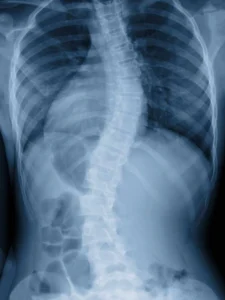

A pinched nerve will sometimes go away on its own, but it depends heavily on what’s causing the compression and how long it’s been there. Mild cases from temporary irritation often resolve within a few weeks. But a pinched nerve caused by an underlying structural problem usually won’t fully resolve without addressing that root cause, and waiting too long can make things worse.
So the honest answer to whether a pinched nerve will go away on its own is: sometimes yes, sometimes no. Let me help you figure out which situation you’re likely in.
What a Pinched Nerve Actually Is
A pinched nerve happens when something puts pressure on a nerve, either the nerve root as it exits the spine or a nerve further along its path. That pressure disrupts the nerve’s normal function, which is what produces the familiar symptoms: pain, numbness, tingling, or a burning sensation, often radiating along the path of the nerve.
What’s actually doing the pinching varies. It might be a herniated or bulging disc pressing on the nerve root. It could be a bone spur from arthritis narrowing the space the nerve travels through. It might be muscle tension or spasm compressing a nerve. Or it could be swelling and inflammation from an injury.
The cause matters enormously when it comes to whether the problem will resolve on its own, because some of these causes are temporary and self-limiting, while others are structural and progressive.
When a Pinched Nerve Might Resolve On Its Own
Some pinched nerves genuinely do improve without treatment. This is most likely when the compression comes from something temporary.
If a nerve is being irritated by short-term inflammation, say from a minor strain or an awkward night’s sleep, the body often clears that inflammation over days to weeks, and the nerve function returns to normal. Similarly, if muscle tension from a temporary situation is compressing a nerve, and that tension resolves, the nerve is relieved.
In these cases, the compression was never structural. It was a passing situation, and once it passes, the nerve recovers. Rest, gentle movement, and time can be enough.
As a general guideline, a mild pinched nerve that’s improving week over week is probably on a good path. If you can see steady progress, that’s a reassuring sign that your body is resolving it.
When It Won’t Go Away Without Help
Here’s the flip side. A pinched nerve caused by a structural problem, like a herniated disc, a bone spur, or spinal misalignment, is unlikely to fully resolve on its own, because the thing causing the compression isn’t going anywhere by itself.
You might get temporary relief. The inflammation around the compression can settle, easing symptoms for a while. But if the underlying structure is still pressing on the nerve, the symptoms tend to return, often triggered by certain positions or activities. This is the pattern of a pinched nerve that keeps coming back.
The warning signs that you’re dealing with something that needs attention include symptoms that persist beyond a few weeks, symptoms that keep recurring after brief improvement, symptoms that are worsening rather than improving, and any weakness in the affected limb. That last one is particularly important.
Why Waiting Too Long Is Risky
Here’s what concerns me about the wait-and-see approach when it’s the wrong situation for it. Nerves don’t tolerate prolonged compression well. When a nerve is compressed for an extended period, the damage can progress from simple irritation to more serious dysfunction.
Prolonged compression can lead to persistent numbness, muscle weakness, and in some cases lasting nerve damage that’s much harder to reverse. A problem that would have responded well to early treatment can become more stubborn and take much longer to resolve if it’s left compressed for months.
Numbness and tingling that becomes constant, or any noticeable weakness, are signals that the nerve is under significant stress and shouldn’t be ignored. These aren’t symptoms to wait out.
How to Tell Which Situation You’re In
You can’t always know the cause of a pinched nerve on your own, which is exactly why assessment matters. But a few general principles help.
If your symptoms are mild, recent, and clearly improving on their own, it’s reasonable to give it a little time with gentle movement and care. If your symptoms have lasted more than a few weeks, keep coming back, are getting worse, or involve any weakness, that’s your cue to get it properly evaluated rather than continuing to wait.
A thorough assessment identifies what’s actually compressing the nerve, which is the only way to know whether it’s the kind of thing that resolves on its own or the kind that needs to be addressed directly.
How Chiropractic Care Helps a Pinched Nerve
When a pinched nerve is caused by a structural issue, the treatment goal is straightforward: relieve the pressure on the nerve. Our chiropractic care works to restore proper alignment and movement to the spine, which reduces the mechanical compression on the affected nerve root and takes the pressure off.
Depending on the cause, this might involve gentle adjustments to restore joint movement, decompression techniques to create space for the nerve, and work to release the muscle tension that’s often part of the picture. Addressing the root cause is what turns a recurring problem into a resolved one.
Many of my Cedar Park patients come in after weeks or months of a pinched nerve that kept flaring up, hoping it would eventually just go away. Once we identify and address what’s actually compressing the nerve, they finally get the lasting relief that waiting never delivered.
I’ve also written about what recovery timelines typically look like in my article on how long a pinched nerve takes to heal, if you want a sense of what to expect once treatment begins.
The Bottom Line
Will a pinched nerve go away on its own? It might, if it’s mild and caused by something temporary. But if it’s persistent, recurring, worsening, or accompanied by weakness, it’s not worth the gamble of waiting. Getting it assessed protects you from the real risk of letting a treatable problem become a lasting one.
If you’re dealing with a pinched nerve that isn’t improving in Cedar Park, Leander, or North Austin, don’t wait it out and hope. Contact Gateway to Wellness or call (512) 250-2224 to find out what’s really going on and get lasting relief.