
You walked in hopeful.You walked out feeling… okay. Maybe even pretty good.
But then a few days later, the pain crept back in. Or worse, it never left.You did the visits, followed the advice, maybe even bought the supplements.And now you’re left wondering: Why didn’t that chiropractor actually fix the problem?
First off—you’re not alone.
I’ve seen this story over and over in my Cedar Park office. Smart people who gave chiropractic a fair shot… and left disappointed.
But here’s what I want you to know:It’s not your fault. And no, it doesn’t mean you’re unfixable.
It usually comes down to these three common (and completely avoidable) mistakes most chiropractors make. Let’s break them down—plus how to make sure it never happens again.
1. They Treated the Pain, Not the Problem
Here’s a little secret: pain is the last symptom to show up and the first one to go away.
If your care is only focused on pain, you’re already behind.
Too many chiropractors use what I call the “crack and coast” method.They adjust the area that hurts, maybe do some quick muscle work, and send you on your way.And hey—it might feel good for a bit. But it’s like putting duct tape on a leaky pipe. It’ll hold… for a minute.
Insider Tip from Dr. Jon: “If you don’t figure out why your body got into pain in the first place, you’re guaranteed to end up right back where you started.”
Pain is often the result of something deeper:
- Movement compensation
- Chronic inflammation
- Poor posture
- Nerve irritation
- Joint instability
If your care plan never asked why your pain exists—there’s no way it could fix it.
And to quote our guy Sherlock Holmes: “It is a capital mistake to theorize before one has data.”You need more than a guess. You need a system.
2. There Was No Clear Plan (or End Point)
Have you ever heard this?
“Just come in when it flares up.”“Let’s see how you’re doing next week.”“We’ll just play it by ear.”
Spoiler alert: That’s not a plan. That’s winging it.
In my office, every new patient gets a defined treatment plan:
- We start with a deep-dive consultation and exam
- We figure out what’s working, what’s not, and what’s compensating for what
- Then we build a strategy with clear benchmarks, progress tracking, and a defined end point
If you’ve ever felt like your previous chiropractor was just “putting out fires” but never rebuilding the house—that’s because they were.
Did You Know? The human body adapts quickly. If we’re not guiding those adaptations with purpose, we can actually reinforce dysfunction—even with the best intentions.
Your care plan should feel like a map, not a loop. You should know:
- Where you are
- Where you’re going
- How long it’ll take to get there
- What success looks like
Without a plan, you’re not getting results. You’re just getting temporary relief.
3. They Didn’t Treat You Like a Whole Person
This one hits hardest.
Your pain didn’t show up in a vacuum.It showed up because of how you move, how you sleep, how you sit at your desk, how you carry stress, how you breathe, how you recover.
If your chiropractor only looked at the one joint that hurt… they missed the whole story.
Let’s say your shoulder hurts. Did they:
- Check your mid-back mobility?
- Look at your posture?
- Ask about your breathing patterns?
- Look at the strength of your scapular stabilizers?
Or did they just adjust the shoulder and move on?
The truth is, most chiropractors aren’t trained—or don’t take the time—to treat the whole system.
Insider Tip from Dr. Jon: “Pain is often the weakest link in the chain. But the problem is almost always somewhere upstream.”
And here’s where it gets personal:Most of my patients are parents, caregivers, weekend warriors, or just plain people trying to live a normal, active life.They don’t want band-aids. They want someone who sees the whole picture and treats them like a human being, not a case number.
So if your last chiropractor never asked about your lifestyle, your stress, or your long-term goals—there’s your answer.
Bonus: What to Look for in a Chiropractor Who Can Actually Help
By now, you might be wondering—Okay, so what should I actually look for?
Glad you asked.
Here’s a checklist I share with friends, family, and my own patients when they’re searching for a chiropractor they can trust:
Do they start with a thorough evaluation?
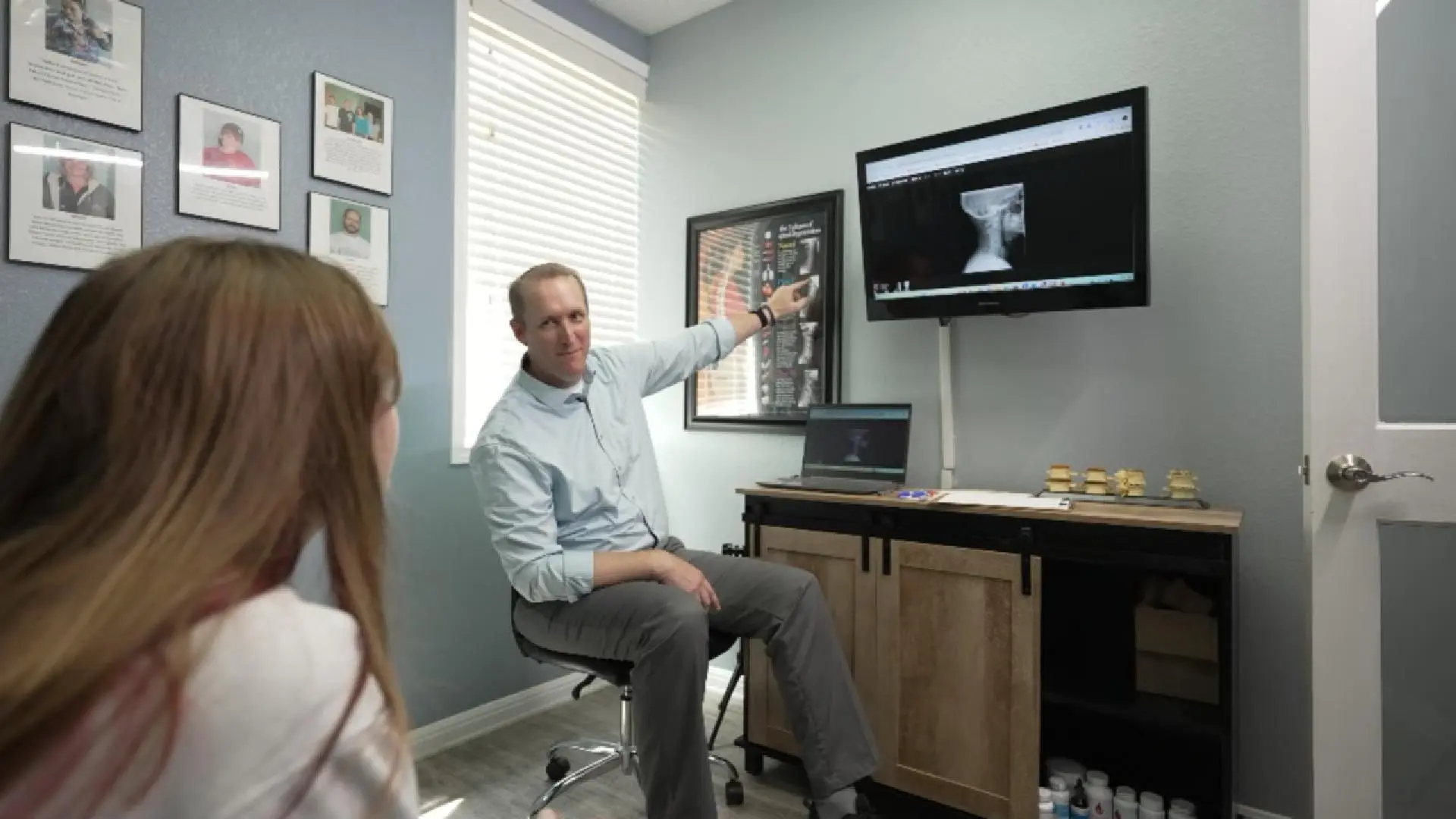
Look for an office that spends time with you on the first visit. X-rays, orthopedic tests, posture and movement analysis—this should all be part of the process.
Do they give you a plan?
No “play it by ear.” Ask what your care timeline will look like, how they’ll track progress, and what outcomes you should expect.
Do they offer more than just adjustments?
Manual therapy, laser, decompression, shockwave, corrective rehab—if they’re not addressing soft tissue, you’ll be stuck in repeat mode.
Do they treat root cause, not just symptoms?
Are they looking at lifestyle, movement, sleep, hydration, stress? The body is a system—real care treats all of it.
Bonus if they have a foam roller in the office and use the word “fascial line” correctly.
The Pop Culture Test
Still unsure? Try this:
If your last chiropractor were a movie character, would they be more like:
- Doc Brown (eccentric, short-term fireworks, but no real plan)
- Gandalf (wise but vague, always disappearing when you need answers)
- Tony Stark (smart, flashy, lots of tools—but still leaves you wondering what just happened)
Now compare that to someone who operates more like:
- Phil Dunphy (personable, a little goofy, but deeply caring)
- Coach Taylor from Friday Night Lights (plans, process, long-term vision)
- Samwise Gamgee (you never question if he’s with you all the way)
That’s the energy we bring at Gateway to Wellness.
You’re Not Broken. You Just Need the Right Approach.
If you’re frustrated, burned out, or skeptical—you have every right to be.
But don’t let a few bad experiences keep you from real healing.The problem wasn’t you.And it wasn’t chiropractic itself.It was the approach.
There are chiropractors out there who will:
- Ask better questions
- Look at the whole picture
- Map out a clear plan
- Track your progress
- Adjust your spine and your habits
I believe in that kind of care because I’ve seen what happens when people get it.They heal.They feel like themselves again.They get back to doing what they love—without fear or frustration.
And if you’re looking for a chiropractor in Cedar Park who actually listens and builds a plan that works with your body (not against it)—we’re here when you’re ready.