
You’ve heard the name.
You’ve seen it on clinic websites.
You may have even whispered to yourself, “Wait, is this the thing Tony Stark used to recover after fighting Thanos?”
Nope, it’s not from a Marvel lab.
But it is changing lives for people right here in Cedar Park—and yes, it does sound a little like sci-fi at first.
Shockwave Therapy is one of the most underused, misunderstood, and under-the-radar healing technologies in the world of non-surgical pain relief. And today, we’re pulling back the curtain on what it really is, how it works, and why so many patients are finally seeing results after years of nothing working.
Wait—What Is Shockwave Therapy, Really?
Let’s start here:
Shockwave Therapy does not involve electricity, shocks, or anything that zaps you.
In fact, the only “shock” is how effective it is.
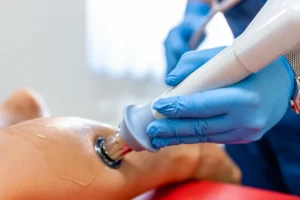
Here at Hill Country Knee Pain Center, we use a system called Piezowave. It works by sending high-frequency sound waves (acoustic pulses) into your tissue at precise depths and locations. Those waves stimulate your body’s natural healing processes, breaking up scar tissue, increasing circulation, and activating dormant cells.
Insider Tip from Dr. Jon: “If you’ve ever had a stubborn area that just won’t heal—there’s a good chance it’s stuck in the inflammation cycle. Shockwave interrupts that and kickstarts real repair.”
In simple terms?
It reboots your healing system—like pressing Ctrl+Alt+Delete on pain that’s been stuck for years.
Why Most Chronic Pain Doesn’t Go Away (Even with PT, Injections, or Ice)
You may have already tried:
- Icing your knees every night
- Going to physical therapy
- Cortisone shots
- Bracing, taping, or wrapping
- Anti-inflammatories or pain meds
And while those can bring short-term relief, they’re not always addressing the problem at its core.
Let’s break down why:
- Scar tissue can block oxygen and blood flow, so healing slows to a crawl
- Chronic inflammation keeps the nervous system in high-alert mode
- Adhesions between tissues prevent normal movement
- Pain compensation patterns shift your posture and create new issues elsewhere
Shockwave Therapy works because it goes deep into those stuck areas and creates a controlled microtrauma. That may sound counterintuitive—but the result is new capillary growth, tissue regeneration, and actual repair instead of just masking symptoms.
Did You Know? Shockwave therapy is widely used in Europe and by professional athletes—including in the NBA, NFL, and Olympic rehab centers. They don’t wait for surgery—they use this.
Which Conditions Does It Actually Help?
Here’s where the “legend” part comes in. We’ve seen results with patients suffering from:
- Degenerative knees (arthritis, bone-on-bone, meniscus issues)
- Hip pain from joint compression or imbalance
- Chronic shoulder problems, including rotator cuff or tendinopathy
- Plantar fasciitis that has failed traditional care
- Scar tissue from old injuries or surgeries
- Low back pain with soft tissue involvement
- Tendonitis and overuse injuries in active adults
“I had knee pain and swelling since 2004. I tried everything. After Shockwave at Hill Country Knee Pain Center, my pain is completely gone. I’m doing things I haven’t done in years.”
— Don C.
What Does Shockwave Therapy Feel Like?
If you’re picturing something uncomfortable—don’t worry.
Most people describe it as a pulsing, tapping, or thumping feeling on the surface of the skin. Some patients feel a little sore afterward, similar to post-workout muscle soreness, but it typically fades quickly.
And unlike surgery or injections, there’s no downtime, no incisions, and no drugs involved.
What to Expect:
- A treatment takes about 10–15 minutes per area
- Most people need 6 to 8 sessions depending on severity
- You may notice change in the first few visits, especially in mobility and function
This isn’t a one-and-done fix—but it’s also not a lifelong “management plan” that keeps you coming back forever. It’s a tool that accelerates actual healing.
Why We Never Use Shockwave Alone
Here’s where it gets even more powerful:
Shockwave is a game-changer—but only when it’s part of the right strategy.
That’s why we always use it alongside:
- Decompression therapy to rehydrate the joint and relieve pressure
- Laser therapy to increase circulation and reduce inflammation
- Manual therapy to correct imbalances and restore alignment
- Rehab exercises to build strength and support new movement patterns
- Nutrition that supports joint repair and reduces internal inflammation
It’s not a gimmick—it’s a system.
Because if you only address one piece of the puzzle, you’ll get partial results.
When we combine these tools, your body has everything it needs to heal for real.
Insider Tip from Dr. Jon: “Pain is like a fire. Shockwave puts out the spark—but it’s the full program that keeps it from coming back.”
Who Is (and Isn’t) a Good Fit for Shockwave Therapy?
If you’ve been struggling with chronic pain in your knees, hips, or shoulders—and nothing has worked—you’re probably a good fit.
Especially if you:
- Have tried physical therapy or chiropractic with limited results
- Want to avoid surgery or injections
- Have scar tissue or degenerative changes
- Feel like you’re “doing everything right” but still not improving
- Want to be active again—without fear or flare-ups
Shockwave may not be the best choice if:
- You have a fresh injury that hasn’t been fully assessed
- You’re unwilling to make lifestyle changes alongside treatment
- You’re looking for a quick fix without addressing root issues
That’s why every patient at our clinic gets a full evaluation first.
We want to make sure it’s the right tool for the job.
From Sci-Fi to Real Life: Healing in the Hill Country
Let’s go back to that sci-fi idea.
Shockwave therapy sounds futuristic.
But it’s available right now, here in Cedar Park. And we’re using it every single day to help people:
- Walk without pain
- Sleep through the night
- Avoid surgery
- Get off meds
- And most importantly—get their lives back
At Hill Country Knee Pain Center, we believe healing should feel hopeful, not hopeless.
We don’t just treat knees.
We treat people—and we help them move forward.
So if you’re tired of managing symptoms and ready to actually solve the problem…
You don’t need to fly to Wakanda.
Just drive to our office.